

Got Rats?
Great Horned Owls may be your natural solution
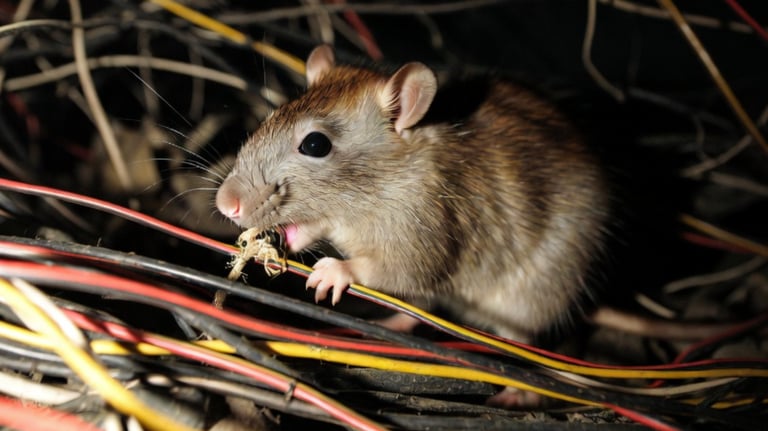
Great Horned Owls prey on rats and other rodents in forests, unlike barn owls that hunt in meadows and vineyards and live in owl boxes rather than on owl platforms. Many cities in the Monterey Peninsula are experiencing costly rat infestations, including damage such as chewed car wiring and HVAC systems, as well as rats nesting in crawlspaces, walls, and attics of homes.
Repair costs can range from $10,000 for HVAC wiring to $15,000 for chewed car wiring. In addition to costly repairs, rats can damage walls and substructures, bring fleas into homes, and cause foul odors. Eradication can be expensive and time-consuming.
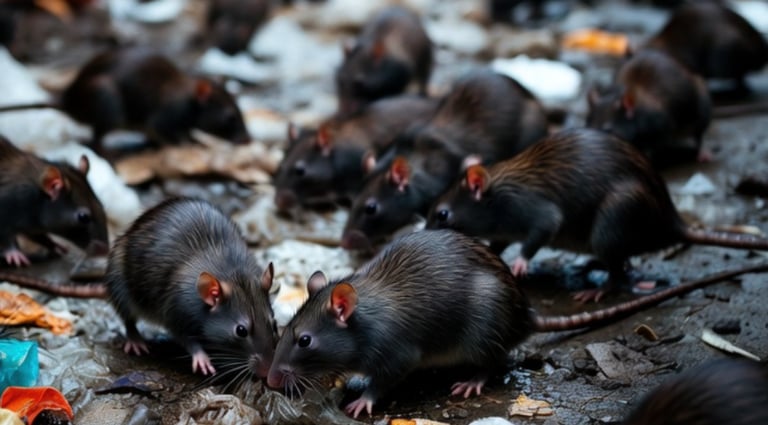
Rats reproduce at an alarming rate. Litters typically number 6–12. Females can become pregnant a day after giving birth and have an average gestation period of three weeks. Newborn rats may become fertile after only 2–3 months.
With healthy forests on the peninsula, abundant residential waste bins, and significant restaurant waste, the rat population has grown explosively, similar to large cities such as San Francisco and New York City.
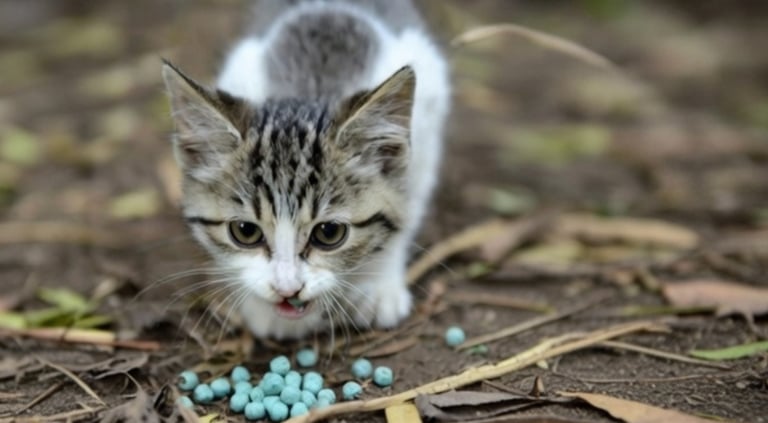
Killing rats with poisons (rodenticides) can control infestations, but these poisons pose severe and often fatal risks to children, pets, and non-target wildlife.
Poisoning rats is not recommended unless performed by a licensed contractor to ensure that trapped rats cannot be consumed by other animals.
Rat Infestations
Rise of the Rats
Rat Poisons
Great Horned Owls Are Nature’s Way of Safely Controlling Rodents
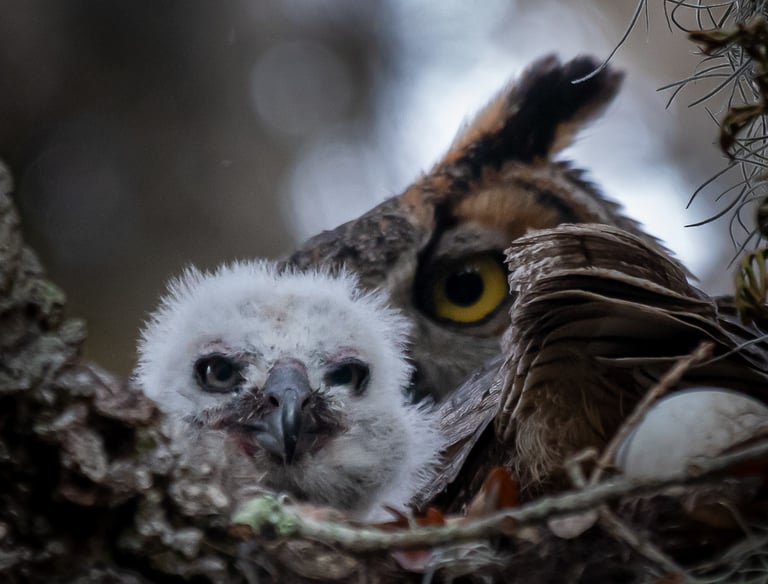
A Great Horned Owl with fledglings can predate up to seven rodents per day — and who doesn’t enjoy hearing an owl’s soft “coo” at night?
Listen to a Great Horned Owl coo
Why Provide Nesting Platforms?
Why a little love can go a long way
They Don't Build Their Own Nests
Great Horned Owls almost never build nests; they typically use abandoned nests from other large birds or natural sites like cavities, cliff ledges, or broken snags.

Habitat Loss
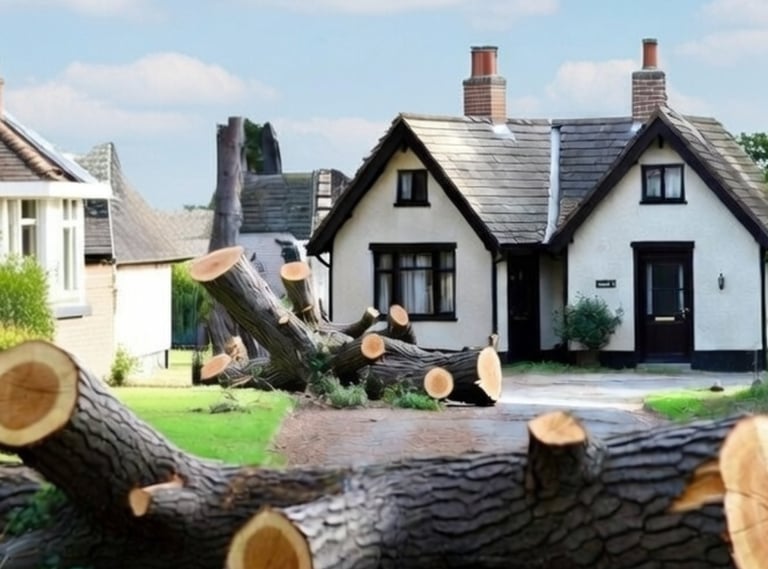
As older tall trees with natural nesting sites are removed, natural options decline. Artificial platforms provide stable, reliable nesting locations that can be reused in future seasons.
Great Horned Owls are highly adaptable and readily use artificial platforms or open-topped nest boxes when natural sites are scarce. Providing these platforms can directly support local populations by offering a necessary, stable location for nesting.
Adaptability
Nest Durability
Natural stick nests can deteriorate quickly after one season's use. Sturdy, well-built artificial platforms can provide a more durable and reliable nesting location that can be reused in subsequent years, increasing nesting success.
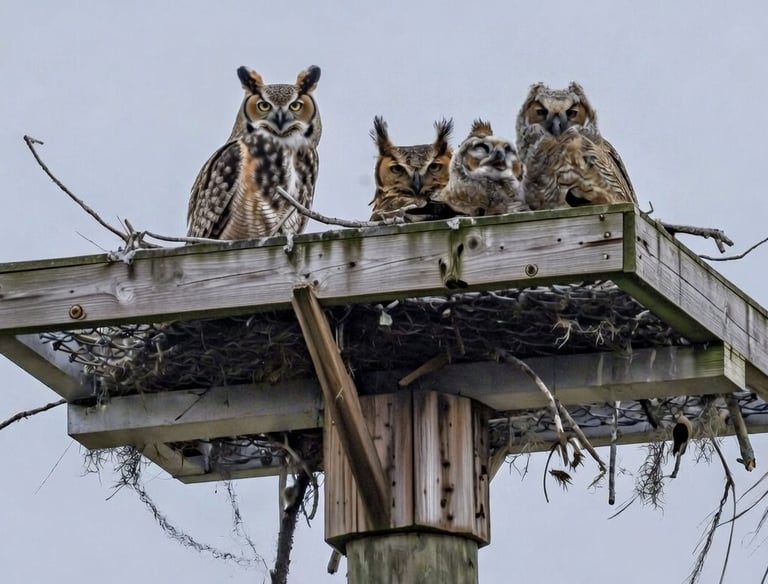
Great Horned Owl Platforms
Great Horned Owl platforms are typically positioned 30 ft and higher from the ground with unrestricted flight access away from busy roads and power lines. Typically, higher than the top of a full-size telephone pole. Check out actual owl platform photos.
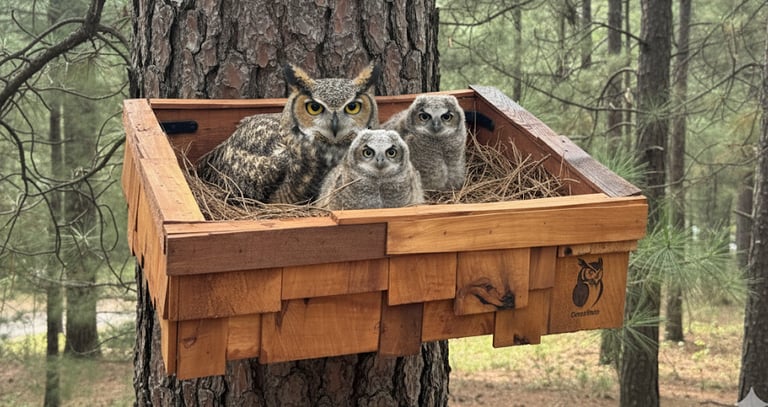
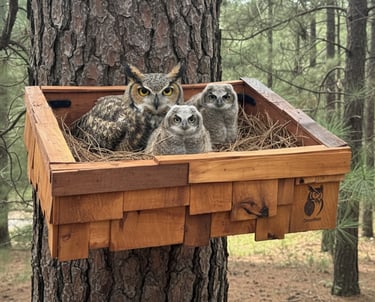
Against Vertical Tree Trunks
Installation includes a metal male and female mounting bracket and under platform support. Build your own platform via the schematics page.
AI photo with a real Carmel Owls platform
Cherry Picker Rental
Check out recent news and events on our Blog
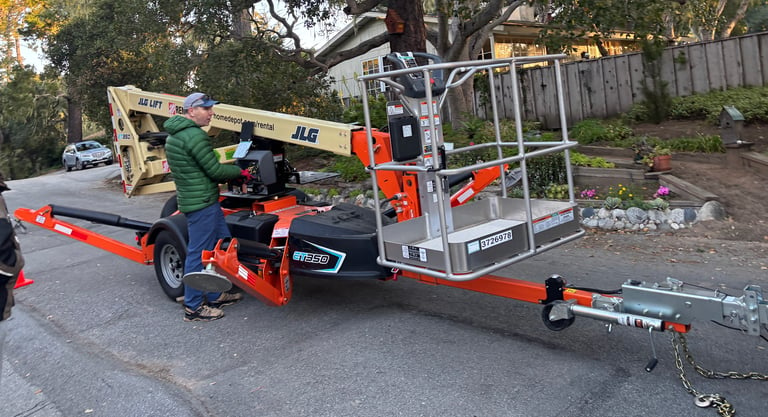
Platforms are installed with a rented cherry picker ($500/day) from Home Depot, which must be safely towed into place. Suitable trees must be in a level area alongside a street or driveway. Once positioned, a platform can be installed in about an hour.
Platforms are installed with a rented cherry picker ($500/day) from Home Depot, which must be safely towed into place. Suitable trees must be in a level area alongside a street or driveway. Once positioned, a platform can be installed in about an hour.